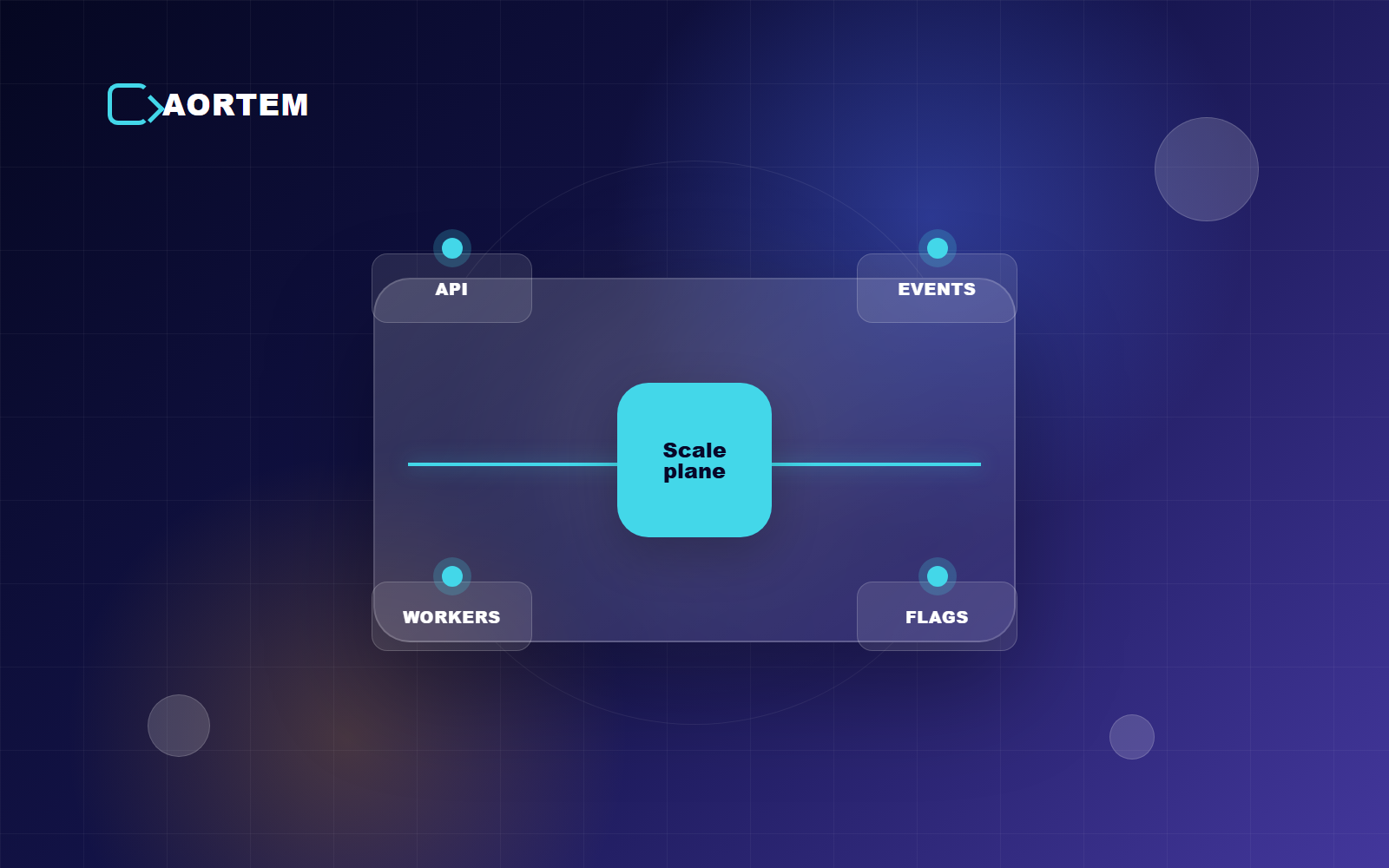
Dart architecture beyond the MVP has to support more than fast launches. In the early stages of a startup, speed is everything, and most teams choose "plug-and-play" backend solutions to launch quickly.
For prototypes and small-to-medium applications, that convenience is useful. However, as products mature and user bases expand, the same convenience can become a limitation. When teams need complex backend logic, service isolation, and predictable scaling, building for the future requires a more robust and flexible architectural foundation.
The Challenges of Maturity
When a Flutter app starts to scale, the engineering requirements shift. You move beyond simple data storage to needing:
- Deep Backend Logic: Complex workflows that go beyond simple triggers.
- Predictable Performance: Eliminating cold starts and ensuring low-latency execution for global users.
- Controlled Deployments: The ability to release features gradually without risking a total system outage.
- Service Portability: The flexibility to move and grow your backend without being locked into a single ecosystem's constraints.
The Power of a Unified Dart Stack
At Aortem, we believe the most efficient way to build is by staying within the language you already know. By using Dart Cloud Functions, teams can eliminate the "context-switching tax" that comes with managing different stacks.
- Logic Reuse: Share your models and validation logic seamlessly between the frontend and backend.
- Developer Velocity: Write, test, and deploy backend services using the same high-performance tools you use for your UI.
- Clean Architecture: Maintain a unified codebase that is easier to document, debug, and scale.
Total Control with IntelliToggle & DartStream
Scaling isn't just about handling more traffic; it's about handling more complexity. Aortem provides the specialized tools needed to manage that growth:
- IntelliToggle: Our advanced feature flagging system gives you total control over rollouts. Launch new backend services to a small percentage of users, monitor the impact, and scale up with zero downtime.
Building for the Next Era
The ecosystem is evolving. We are seeing a massive shift toward AI-native backends and enterprise-grade systems built entirely on Dart. These modern applications require infrastructure that is as elegant as the code that powers them.
Our mission at Aortem is to provide that infrastructure. From DartCodeAI to our scalable cloud execution environment, we are helping developers move from a "working prototype" to a "global platform" with less friction and greater architectural control.
What Changes After Product-Market Fit
High-growth Dart applications need architecture that separates customer-facing experiments from core platform behavior. Teams need to test ideas quickly, but they also need boundaries that protect data flows, billing logic, authentication, and critical workflows.
- Operational visibility: Teams need to know what changed, who changed it, and how it affected live users.
- Release control: New capabilities should be rolled out gradually, measured, and reversed without a full redeploy.
- Service ownership: Backend responsibilities should be clear enough for teams to scale without creating a fragile shared codebase.
How Aortem Supports Scale
Aortem connects Dart-native execution, feature management, and operational visibility so teams can keep product velocity high without letting every release become a production risk. The result is a path from working prototype to durable platform with better control over cost, behavior, and customer experience.
Why This Architecture Matters for Revenue
Architecture choices become business choices once an application is serving real customers. Safer rollouts reduce support load, clearer service boundaries shorten onboarding time, and better runtime control helps teams protect revenue while still shipping new capabilities. This is where Dart architecture becomes more than an engineering preference. It becomes the operating model for growth.
Customer Conversations Become Clearer
When the architecture is explicit, teams can explain the platform more clearly to customers, stakeholders, and implementation partners. That clarity matters during enterprise evaluations because buyers want to understand how the product scales, how incidents are controlled, and how new capabilities reach users safely.
Ready to elevate your infrastructure? Get Started with Dart Cloud Functions | Explore the Aortem Ecosystem