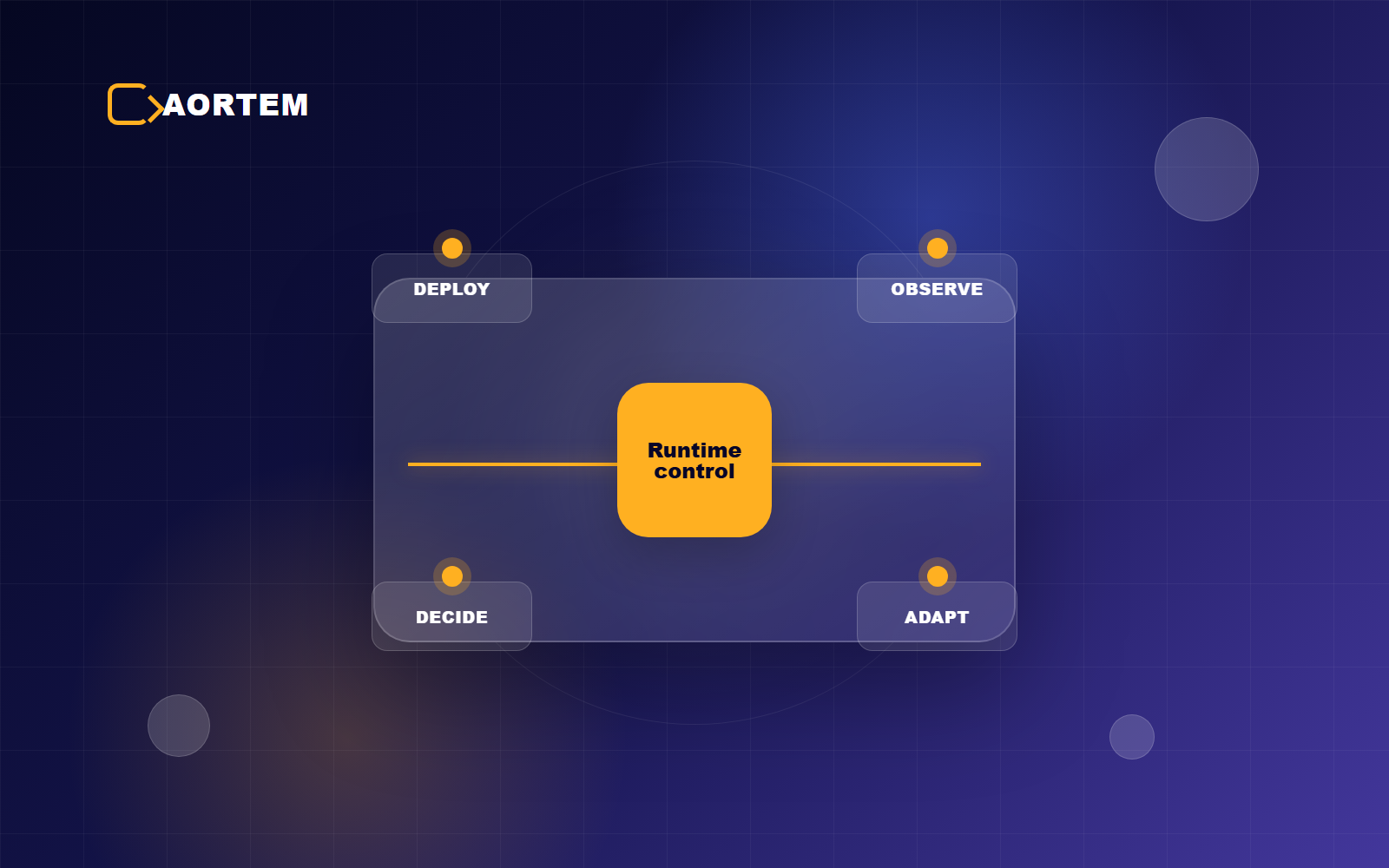
An AI-native Dart backend still needs a reviewable contract, trustworthy permission checks, and evidence that important operations behave correctly. Generated code can help a team produce a first implementation, but the team remains responsible for deciding what that implementation is allowed to do. A useful review begins with one bounded user operation and follows it through the system.
This guide provides a practical sequence for reviewing AI-assisted backend changes. It is intended for Dart and Flutter teams moving from a working draft to an implementation they can test and operate. Use the sequence on a small change first, then record which checks found real defects and which assumptions still need evidence.
Start with the AI-native Dart backend contract
Describe the operation in plain language before reviewing the implementation. Name the authenticated actor, the resource being changed, the required permission, and the expected result. Include an invalid request and a request from a user who is signed in but does not have access. A happy-path example alone leaves the most important boundaries unspecified.
Follow identifiers through the code. A client-supplied organization ID is an input to validate, not proof of membership. Confirm that the server checks current access and derives sensitive scope from trusted state. If a request selects another tenant’s record, the operation must fail without revealing whether that record exists.
- What state can this actor read or modify?
- Which fields are accepted, rejected, or computed by the server?
- What must remain unchanged if validation fails?
- Which response helps a legitimate caller recover without exposing private data?
Use static analysis to remove avoidable uncertainty
Dart’s analysis documentation explains how the analyzer identifies problems before execution and how analysis options control checks. Run analysis using the repository’s actual configuration. Review newly introduced warnings, unsafe casts, and nullable values rather than treating a successful build as a complete review.
Do not suppress a diagnostic merely because the generated implementation compiles after suppression. Find the boundary that produced the uncertain value and make its expected shape explicit. Review dependency changes as part of the change: a new package introduces an API, a maintenance relationship, and possibly a new data destination.
Keep the toolchain and resolved dependencies with the review evidence. An analysis result applies to the code and configuration that were checked. It does not establish permission enforcement, runtime reliability, or compatibility with every hosted environment.
Test behavior at the real boundary
Dart’s testing guidance provides the starting point for automated tests. Choose tests that can fail when an important behavior is wrong. A test that repeats the implementation’s own decision adds little confidence. Instead, assert the externally observable result of an operation and the state that must be preserved.
For a write endpoint, cover a valid write, a rejected payload, an unauthorized actor, and a retry of the same request. For a paginated read, check the scope of returned records and the boundary between pages. When correctness depends on database constraints or transactions, exercise those behaviors against an isolated database rather than replacing them entirely with mocks.
Use synthetic fixtures and restore only fixtures the test owns. Never make a test pass by broadening production access or weakening a validation rule. If a required environment is unavailable, record the untested behavior and its concrete prerequisite.
Inspect retries, failures, and side effects
Trace what happens when a dependency fails after the request has begun. A retry can duplicate an email, create a second job, or charge twice unless the operation has a deliberate idempotency strategy. Decide which state transition establishes completion and how a caller can safely discover that result after a timeout.
Keep database changes atomic where the contract requires atomicity. For external effects that cannot share the transaction, make the handoff and recovery path explicit. Review timeout and cancellation behavior, and put finite limits on work accepted from a single request. These limits should be enforced by the server, not only suggested by a frontend control.
Leave evidence an operator can use
Log enough to diagnose a failed operation without logging secrets, authentication tokens, or raw customer content. Useful records may include a request identifier, a bounded error category, and the relevant code or configuration version. Review retention and access alongside the fields being logged.
Before release, assemble a short record: reviewed source version, analysis result, meaningful test outcomes, dependency assumptions, and remaining limitations. Verify the deployed version separately and exercise one representative operation in the intended environment. Keep feature exposure and permissions bounded while observing the first real results.
Building an AI-native Dart backend? Explore Aortem’s developer products, then use this review sequence to decide which contracts, tests, and operational controls your application needs before release.